Friday, July 1, 2011

HIV/AIDS Awareness Day

Last month, I organized a HIV/AIDS Awareness day for my students and community. It was a huge success drawing approximately 500 secondary school students and 100 community members in attendance. With the Bishop Abiero Girls’ Health Club and help of Nyanza Reproductive Health Society (NRHS), we were able to facilitate a successful event.

As per usual, the day started out way behind schedule. Approximately 4 hours after they were supposed to arrive, the NRHS workers FINALLY arrived (note to self; never ever ever expect a Kenyan function to begin on time). Approximately 500 students were in attendance from my school, Bishop Okoth, and Orando secondary schools. They started the day with a health talk for a Ministry of Health Official, Naomi, who discussed rape and sexual assault. The students were active listeners and asked sincere, thought provoking questions.


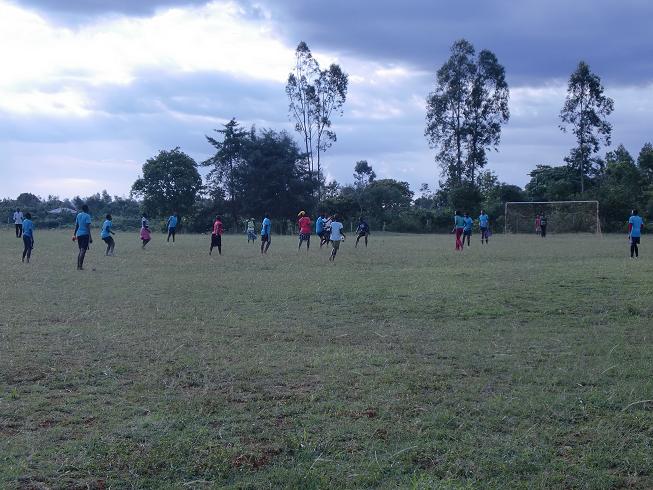
The main entertainment of the day was a football (soccer) tournament between students and community groups. It was entertaining to watch especially when a women’s group that had asked to compete arrived and consisted of mostly 50 year old grannies :)


Here, students and community members watch a football match


And here are the winners of the football matches with their gleaming trophies!


The students also presented HIV/AIDS related dramas, songs, and dances. These unveiled some talented actresses and actors! My students performed a drama on HIV stigma in the community:


Orando Secondary Students performed a traditional Luo song about HIV:


Bishop Okoth students performed a drama about risky behaviour that leads to HIV transmission.


Here, some children from the community enjoy the entertainment:


The day was a lot of fun and was very successful. NRHS performed 42 voluntary medical male circumcisions ( which helps to reduce HIV transmission) and 83 students and community members were HIV tested and counseled. The schools have already asked for another one to be planned for next year!

Tuesday, May 24, 2011

RWANDA

If any of you have the opportunity to go to Rwanda I HIGHLY recommend it. This tiny landlocked country known for its 1994 horrific genocide, as it turns out, is a spectacular place to visit. It is known as the land of a thousand hills and from the moment we touched down in Kigali, I could see why. Everywhere you look there is hill after hill of bright green scenery.


In a stark contrast to the littered and chaotic streets of Nairobi and other East African cities I’ve visited, Kigali is (gasp) orderly and incredibly clean! There are streetlamps that drivers actually obey. And plastic bags are banned throughout the country meaning that there is hardly any trash on the street. And not every single person on the street asks for money or a bribe. Wow!

We arrived in the shockingly clean city of Kigali and then travelled to Ruhengeri where we would stay the night before embarking on our gorilla trekking tour a la Dian Fossey. Ruhengeri was cold cold cold, not anywhere near the equatorially heat of my village. Anywho we spent the night here before waking up bright and early to go to Parc les Volcans to start our gorilla adventure. Enjoy the pictures!


At the park gate and with no real idea of what was in store.


Hiking through dense jungle foliage with no paths, only a gorilla tracker clearing the trail with a machete.


After 3 hours of hiking in the rain and cold we finally reached this gorilla family. It has 26 members including a few newborns and three silverbacks making it the largest group in the park.


Doesn't he look so human?!?! Gorillas and humans share so many mannerisms, it's incredible.


Clearly he is not as fascinated with us as we are with him.


Stretching for an afternoon nap. Looks comfortable.


Pondering life.


Swinging on a vine. A true tarzan.


We were charged three times by a silverback. The guides advised us not to run, but as you might imagine, it’s quite terrifying to be charged by a massive gorilla!


And, drenched, exhausted, and very much exhilarated, we received our gorilla trekking certificates!

The day after the gorilla trekking we went to see the yellow monkeys. While they are not nearly as thrilling as the gorillas nor as photogenic, they were pretty awesome! Here are some of the best pictures:


We headed back to the capital for some celebratory beers and American food. We also visited the genocide museum in Kigali which is a very moving memorial. It is astonishing to know that just 17 years ago a horrific massacre of 100,000 people in just 100 days ravaged the small country. How could such a thing happen? The stories of the genocide are disturbing and heartbreaking and appalling. May something like this never happen again here or anywhere.

All in all, our trip to Rwanda was a memorable and amazing experience that I hope I’ll get to relive sometime in the future. Anyone interested in joining me on gorilla trek numero dos? It’s definitely worth it!

Sunday, May 8, 2011

Camp GLOW

Part of my April holiday was spent at Camp GLOW. Camp GLOW took place on the coast of Kenya the second week of April. GLOW (Girls Leading Our World) is a girl’s empowerment camp funded by PEPFAR (Presidents Emergency Plan For AIDS Relief) and facilitated by PCVs (Peace Corps Volunteers). Ok that’s enough acronyms for the day.

Camp GLOW, in summary, was amazing! There were 48 girls nominated by PCVs that attended the camp. Most of them had never left their villages before which led to some very interesting experiences. For instance, some students had never used a shower before ( I could see how a spray of mysterious water could be intimidating after a lifetime of bucket baths) nor a Western toilet. One student was terrified of an escalator and stayed on the ground floor of the mall she was visiting.

Besides exposure, the students learned some very valuable information about HIV/AIDS, female genital mutilation, communication, gender roles, self defence, achieving their goals and many other useful topics. Here, one of my students learns how to put on a condom correctly. We then had a condom water balloon toss to demonstrate just how strong condoms really are.


Many students have trouble buying sanitary napkins. This often leads to students either not going to school during their periods or prostitution for sanitary pads. I taught the students a method of making reusable sanitary napkins which will hopefully give them a longer lasting option than expensive disposable pads.


We also took them to visit a great NGO called Meeting the Goal Post which uses football (soccer) to teach girls needed skills such as teamwork and communication. Our campers played football, attended peer counselling sessions, and learned about the organization, as well as found interest in braiding the camp counsellors’ hair.


One night we had a bonfire with the campers. Don’t you remember having bonfires as a kid? Telling ghost stories, making smores, and cooking hotdogs are quintessential campfire memories of mine. Bonfires remind me of my childhood. For most Kenyans, bonfires remind them of cooking because why else would you use a good pile of firewood? We taught the campers how to make smores (my absolute FAVORITE food. Seriously, ask my roommates, I lived off of smores in college) and they in turn, taught us some songs. Not your traditional kumbaya or girl scout songs, but songs traditional to their different tribes and to Kenya. It was an enjoyable night spent dancing, singing, roasting marshmallows and of course, waking up the next morning with the smell of campfire smoke in my hair to remind of all that fun :)


On the last day we took the girls to the beach. What an experience! Some girls had never seen the ocean before and were absolutely terrified, fascinated, and excited all at the same time, to see the Indian Ocean. My student even brought back a bottle of ocean water for her classmates to taste!


All in all, Camp GLOW was a success. What started out as a timid group of girls became a lively bunch of individuals. I am continually amazed at just how amazing Kenyan youth can be. While the week was exhausting and incredibly hot (hello humidity!) it was also valuable, worthwhile, and memorable for myself, the other counsellors, and the campers!


P.S. Happy Mother's Day all you moms out there! And to my very special American mom, happy happy mother's day! I miss you!

Thursday, May 5, 2011

Home Sweet Home

To all my readers who have not yet given up on my sporadic, infrequent writing, I’m going to make you a promise that I will really try to keep: I, Jenny Nakata, will hereby write a blog post every two weeks. Feel free to call my bluff if I don’t.

Anwho, to recap last term, I would say that it was a relatively difficult one. You would think that after a year here it would just get easier right? Wrong! Things that I used to attribute to cultural differences ( treating women as inferior, caning, etc) I now have zero tolerance for. My bullshit-o-meter is honed to 0.00 and if someone tries to tell me that the bible says women should serve men and blah blah blah blah, I have absolutely no self control in holding my tongue. Also, if a matatu tout tries to overcharge me by even 10 shillings I go into a rant about serving his country for free, I’m poor, he’s a racist, etc, until he finally capitulates in sheer fear of the crazy mzungu lady who will go through the effort of fighting over 10 shillings!

You may ask, with all the things that make me want to pull out my hair and scream, why do I stay here? Good question. I made a list the other night and realized all of the things that I truly do care about here.
1. I absolutely adore my students. They make me laugh, they are inquisitive, and I want to see them grow up to be productive members of society.
2. I respect my principal and her vision for the school. I want to be here to help her achieve the goals she has strived so tirelessly for.
3. My village is beautiful. The stars are so clear at night, like I’ve never seen before. I can hike to see Lake Victoria. It’s green and lush and there are guava, mango, and banana trees everywhere.
4. There are adorable children everywhere. Where else could I go and pick up a random child off the streets without looking like a kidnapper? Nowhere. Some of my happiest daily moments are when my children friends greet me and walk with me on the way to the market or on the way home. They make me smile with their genuine curiosity and true happiness.
5. My dogs are happy here. They have open fields to run around and chase birds. They walk the two hours to school and back everyday and roll around in the mud. I couldn’t imagine a happier place for my dogs to be.
6. I appreciate feeling connected to my surroundings. I know that I used 30 litres of water yesterday or 1.5 buckets to cook dinner and wash my dishes. I know how many leaves of sukuma wiki (kale) I’ve eaten and I’ve picked the bananas straight from the tree that I’ll eat this week. Do you know how much water you’ve used today?
7. I enjoy teaching life skills. I kind of feel like the little elf inside of google’s search engine (there is an elf that does all that work, right!?) who smirks at some of the questions that people ask. “Madam, if you take birth control will you give birth to a cow? Can your vagina fall out of your body? If you sneeze in a plane will it cause it to fall from the sky?” I enjoy being able to answer questions that my students don’t have answers for.
8. People in the village know me now. They don’t ask me for money like they used to. Instead, I have enjoyable conversations with a good number of people every morning and evening. In the morning, I say hellos (yes, hello can be plural as Kenyan English has taught me) to the neighbors, the duku (store) owners, approximately 30 children on their way to school, the old women that sell fruit on the road and countless villagers along the way. In the evening, it’s a similar routine, many hellos, many handshakes, and then I meet and chat with my market friends: William an old friendly man, Dolphin who sells vegetables, Mama Beatrice, the butcher for bones for my dog, Rose who sells medicine, Lucy who sells omena (small fish) , and an elderly toothless man who fixes my shoes. On the way home, I often stop at my friend Emma’s house and stay there and chat before rushing home before darkness falls. Then I have a cup of tea with my grandma and grandpa next door. There are lots and lots of daily human interactions, something that I know I will miss when back in the states.
9. I love learning and practicing languages. I like being able to communicate in Kiswahili and while I still struggle with dhoLuo, what better place to practice than in a village of Luo people? Learning new words and phrases everyday keeps me on my toes.
10. Living here gives me an amazing opportunity to travel. Going to Zanzibar for a holiday trip or mountain gorilla trekking in Rwanda for the weekend is something that I can only do while living in East Africa. I love love love to travel and living here has given me the chances to do so.

So when last term was really rough and all I could think about was going home (not having to eat ugali everyday? Yes please!) the things that I appreciate about living here became all the more apparent. While I do really really miss people, food, cleanliness and easiness of life in America, I do also enjoy living here. I also had a busy month of April away from site (blog posts coming soon!) which made me miss the routine and serenity of village life. So now as I am sitting here with my dogs at my feet, trying to finish this before my computer dies since there’s no electricity today, I feel comfortable and at home.

Saturday, February 19, 2011

BISHOP ABIERO GIRLS' SECONDARY SCHOOL LABORATORY CONSTRUCTION

Dearest Family and Friends,
Finally (FINALLY!!!) my Peace Corps Partnership Proposal (PCPP) has been approved and posted on the Peace Corps website. The proposal is for the completion of my school’s laboratory. As a science teacher, I can clearly see how the lack of hands on activities has a detrimental effect on the interest of studying of the sciences. How can students be enthusiastic about learning when they don’t know the practical applications? Finishing this laboratory and providing a place for students to develop their critical thinking skills is so important to me. But I need your help! The PCPP depends on friends and family (that’s you!) of the Peace Corps Volunteer (PCV) to donate towards funding. Once all the money is raised, the PCV (that’s me!) will ensure that the project is completed and not lost to corrupt hands along the way. Therefore, your tax deductible donations will go directly to my school! Please, take a look at the project at:

https://www.peacecorps.gov/index.cfm?shell=donate.contribute.projDetail&projdesc=615-185

And here are some pictures of the unfinished laboratory for your viewing pleasure.


Thanks for looking and a million thanks if you can donate!

Jenny

Sunday, February 6, 2011

Puppies Galore

I think I’m becoming that crazy woman next door who only talks to her pets. And on the rare occasion that she does interact with any other humankind, she talks about, of course, her pets. So because I’m admitting my puppy obsession, it’s ok to talk about them some more, right? Here are some pictures of them. Aren’t they cute?!


And finally Nala's swinging boobs. Don't worry they're slowly retracting.

Tuesday, February 1, 2011

Waiting for Water

Living on the equator has its benefits. It’s sunny for most days of the year ( a plus for a California girl missing home). The day’s length is relatively constant (no confusing fall back, spring forward… or is the other way around?). And it’s pretty cool to live next to the Rotary Club’s “You are now passing the equator” sign. But it’s not beneficial during this drawn out drought. According to my school’s principal, in the four years that she has been in Magwar she’s never seen a drought like this.
My previous conception of drought included a TV reporter advising all earth conscious folk to water your lawn only once a day, changing the vegetable garden sprinklers, or my mom warning us to save water by turning off the tap when brushing our teeth. But here, in Kenya, a drought means something completely different. It means wilting maize, beans and kale crops therefore questioning a family’s ability to feed its children. It means dust covered foliage on the roadside. It means the rain water tanks are squeezing out their last drop of clean drinking water. It means the school’s seemingly endless well drying up leaving a few inches of muddy slush. It means school children wandering Magwar with jerry cans and buckets searching for a well that hasn’t yet met the same fate.
While we wait for the rain to come, I can’t help but wonder, what if it doesn’t? Of course, it will one day, but the scorching heat and thirsty students and panting dogs make me question the when. When will it come to save the parched crops? When it will come to change the dusty roads to muddy ones? Never before has water been such a continual thought on my mind. As I sit here looking up at the cloudless sky, I can only help that day will come soon. Soon enough to replenish our well, to provide drinking water, to quench the crops. Soon enough to make me wish the mud were dust. It will, but will it be soon enough?

*Disclaimer: It rained! It hailed! Our tank has water! I wrote this entry a week ago and now can gladly say that rain has come to our village. The buckets are under the rain gutters. The plants are dust free. And the people are happy.